
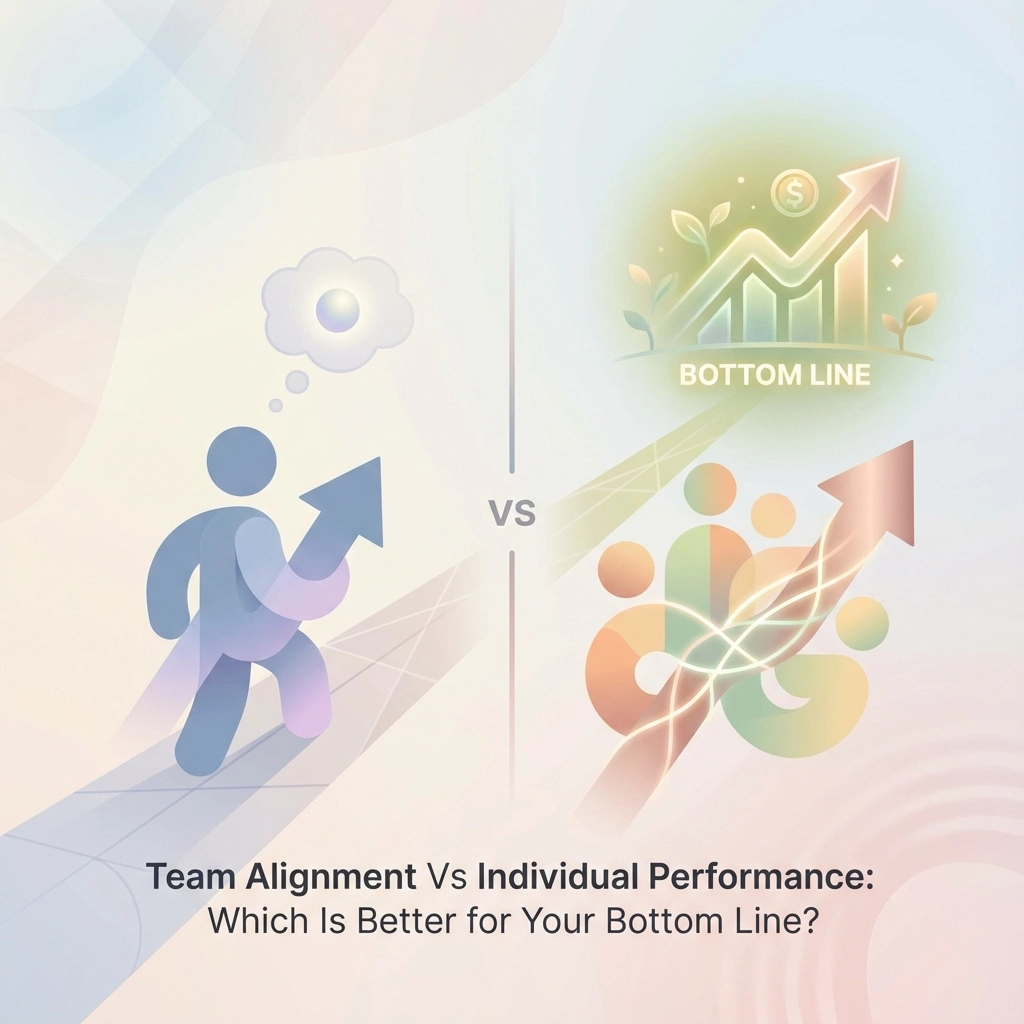
Here’s the truth most leaders won’t tell you: You’re asking the wrong question.
The choice between team alignment and individual performance is a false dichotomy that’s costing you serious money. I learned this the hard way: through seven fortunes gained and eight lost, through bathroom floor breakdowns, and through the kind of transformation that only comes when everything you thought you knew gets shattered.
Let me share what really drives bottom-line results, and why the most successful leaders I coach have stopped choosing sides in this debate.
The Night Everything Changed
Back in 2016, I was sitting on my bathroom floor at 3 AM, staring at another failed quarter. My team was crushing individual metrics: sales numbers looked decent, productivity was up, everyone was hitting their personal KPIs. But we were hemorrhaging money and morale.
That’s when it hit me: I’d been optimizing for the wrong thing entirely.
I’d spent years building a team of individual performers who worked in silos. Sure, they were talented. But talent without alignment is like having a Ferrari with square wheels: impressive on paper, disaster in practice.
The research backs this up in ways that shocked even me. Organizations with strong goal alignment achieve up to double the financial performance of their misaligned counterparts. We’re talking 58% higher operating profits and 21% greater productivity gains.
But here’s what the data doesn’t capture: the human cost of getting this wrong.

Why Most Leaders Get This Backwards
You’ve been conditioned to think in either/or terms. Either you focus on individual excellence or team cohesion. Either you drive personal accountability or collective responsibility.
This thinking is costing you everything.
Only 23% of businesses effectively match personal and corporate objectives. That means 77% of organizations are leaving money on the table because they haven’t figured out how to make individual performance serve team alignment.
I see this constantly in my coaching practice. CEOs come to me frustrated because their “star performers” are actually undermining company culture. Or they’ve gone too far the other direction: prioritizing team harmony while individual excellence suffers.
Both approaches fail because they miss the fundamental principle: Individual performance is only valuable when it’s aligned with your larger mission.
The Transaction as Transformation Principle
When I committed to becoming a coach and leader, I didn’t just invest money: I invested everything. Monetarily, spiritually, physically, mentally. That’s what I call transaction as transformation. Real change demands full-spectrum commitment.
The same principle applies to your team. You can’t have sustainable bottom-line growth without getting your people to commit fully: not just to their individual roles, but to the collective vision.
Here’s what this looks like in practice:
82% of employees feel more motivated when their individual goals align with team and company objectives. When you get this right, individual performance doesn’t compete with team alignment: it amplifies it.
Teams that master this integration report 40% more production and 30% less voluntary turnover. More importantly, they experience what I call “exponential momentum”: where individual excellence creates team success, which creates organizational growth, which attracts better individual performers.

The Real Framework That Works
After losing my wife in 2018, I learned something about transformation that changed how I approach everything: including business alignment. No transformation comes free. Some lessons cost more than others. But the most expensive lesson is the one you don’t learn.
Here’s the framework I use with Fortune 500 CEOs and startup founders alike:
Step 1: Define Your North Star Clearly
Your team can’t align with what they can’t see. Your vision needs to be so clear that every individual decision either moves toward it or away from it. No gray areas.
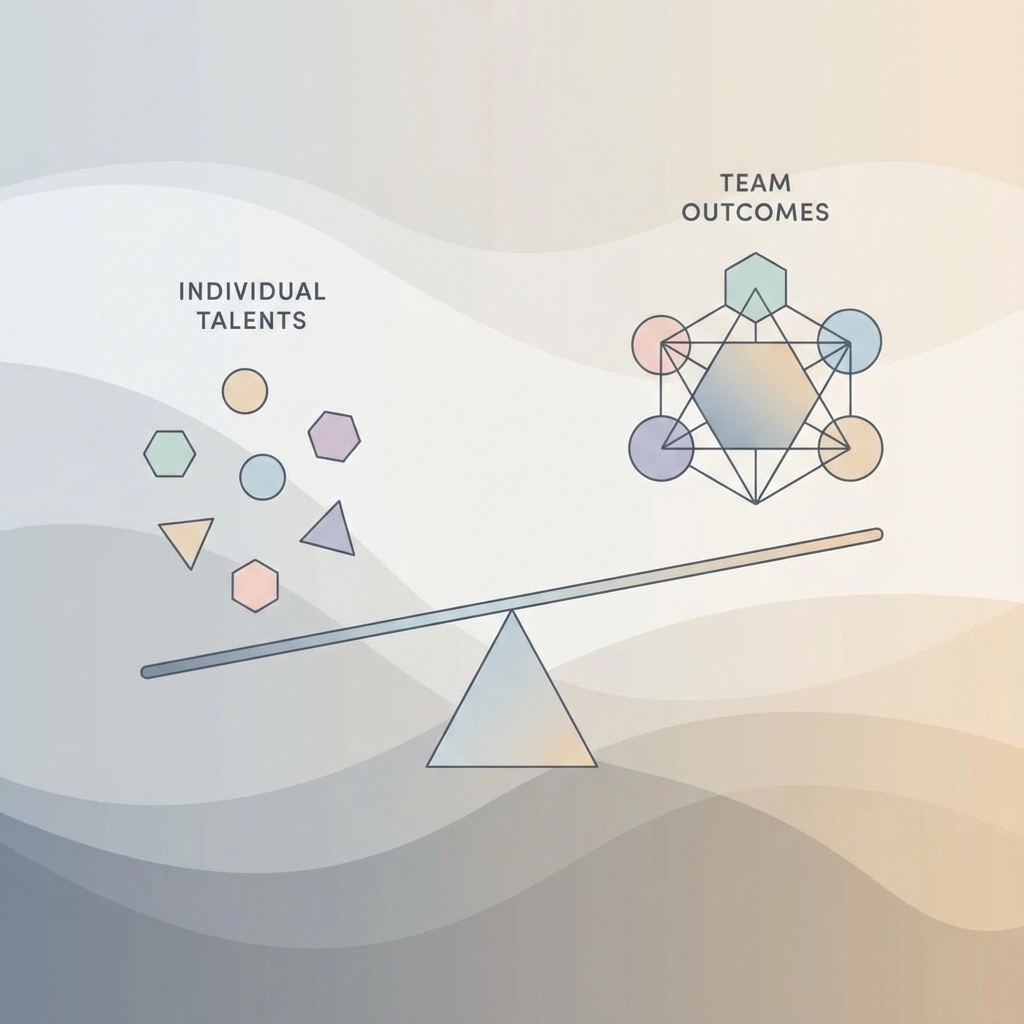
Step 2: Connect Individual Strengths to Collective Outcomes
This isn’t about making everyone the same. It’s about showing each person how their unique talents serve the bigger picture. When people understand how their personal excellence creates team success, motivation becomes automatic.
Step 3: Measure What Matters Together
Track individual metrics that ladder up to team goals that ladder up to organizational objectives. When your measurement system is aligned, behavior follows naturally.
Step 4: Celebrate Interdependence
Recognize and reward moments when individual performers make team success possible. Make it clear that isolated excellence isn’t excellence at all.
What This Looks Like in Your Business
Let me give you a concrete example from one of my coaching clients. Sarah runs a 200-person consulting firm. She came to me because her top performers were burning out her best team players.
We implemented this framework over nine weeks. Here’s what happened:
- Project success rates increased by 54% because communication and collaboration improved
- Employee engagement rose 20% as individual and team goals came into alignment
- Client satisfaction scores jumped 15 points because the team started delivering cohesive solutions instead of fragmented expertise
- Voluntary turnover dropped by half as people felt connected to something bigger than their paychecks
The key insight? Sarah stopped trying to choose between individual performance and team alignment. Instead, she created a system where individual excellence required team collaboration.
The Bottom Line Reality Check
Here’s what I wish someone had told me during those bathroom floor moments: You don’t have to choose between developing individual performers and building aligned teams. You have to do both: and you have to do them in service of each other.
Organizations that get this right achieve double the financial performance of those that don’t. That’s not just better margins: that’s competitive advantage that compounds over time.
But transformation doesn’t happen by accident. It requires the kind of full-spectrum commitment I learned to demand from myself after losing everything multiple times. Your people need to see you making that commitment before they’ll make it themselves.

Your Next Move
The question isn’t whether to focus on individual performance or team alignment. The question is: Are you ready to create a culture where individual excellence amplifies team success?
This requires more than new policies or org charts. It requires the kind of inner work that most leaders avoid: looking honestly at how your own alignment (or lack thereof) is creating the patterns you see in your organization.
As within, so without. Your external results will always mirror your internal alignment.
The companies winning right now aren’t choosing sides in the individual vs. team debate. They’re integrating both into systems that create exponential growth. The data proves it. My experience confirms it. The question is whether you’re ready to do the work required to make it happen in your organization.
Because here’s the truth those bathroom floor moments taught me: Transformation always costs something. But staying the same costs everything.
Your bottom line is waiting for you to stop choosing between individual performance and team alignment: and start creating systems where both thrive together.