
I used to think mental clarity meant grinding harder. Wake up at 4:30 AM, meditate for an hour, journal until my hand cramped, then dive into a 14-hour workday fueled by sheer willpower and caffeine.
Sound familiar?
Here’s what I discovered after burning out twice as a CEO: your mind isn’t a machine you can force into submission. It’s more like a sophisticated operating system that needs the right framework to run smoothly.
After years of trial and error : and working with thousands of entrepreneurs who’ve struggled with the same mental chaos : I’ve cracked the code on creating calm focus without the exhausting grind.
Let me share the exact framework that changed everything.
Why Your Current Focus Strategy Is Backfiring
Your brain has three hardwired priorities: protect you, predict what’s coming next, and preserve energy. This survival programming worked great when we were dodging saber-tooth tigers. But in today’s world? It creates the mental noise that kills your focus.
Here’s the problem: most productivity advice fights against these natural systems instead of working with them.
You try to force focus through willpower. Your brain rebels by creating more mental chatter.
You attempt to eliminate all distractions. Your mind generates new ones from thin air.
You push harder when you feel scattered. Your nervous system downshifts into protection mode.
The solution isn’t more discipline : it’s better strategy.
The Mind Mastery Framework: Four Pillars That Actually Work
After studying neuroscience, testing dozens of techniques with my clients, and honestly : failing spectacularly a few times : I’ve distilled mind mastery into four core pillars.
Pillar 1: System Recognition
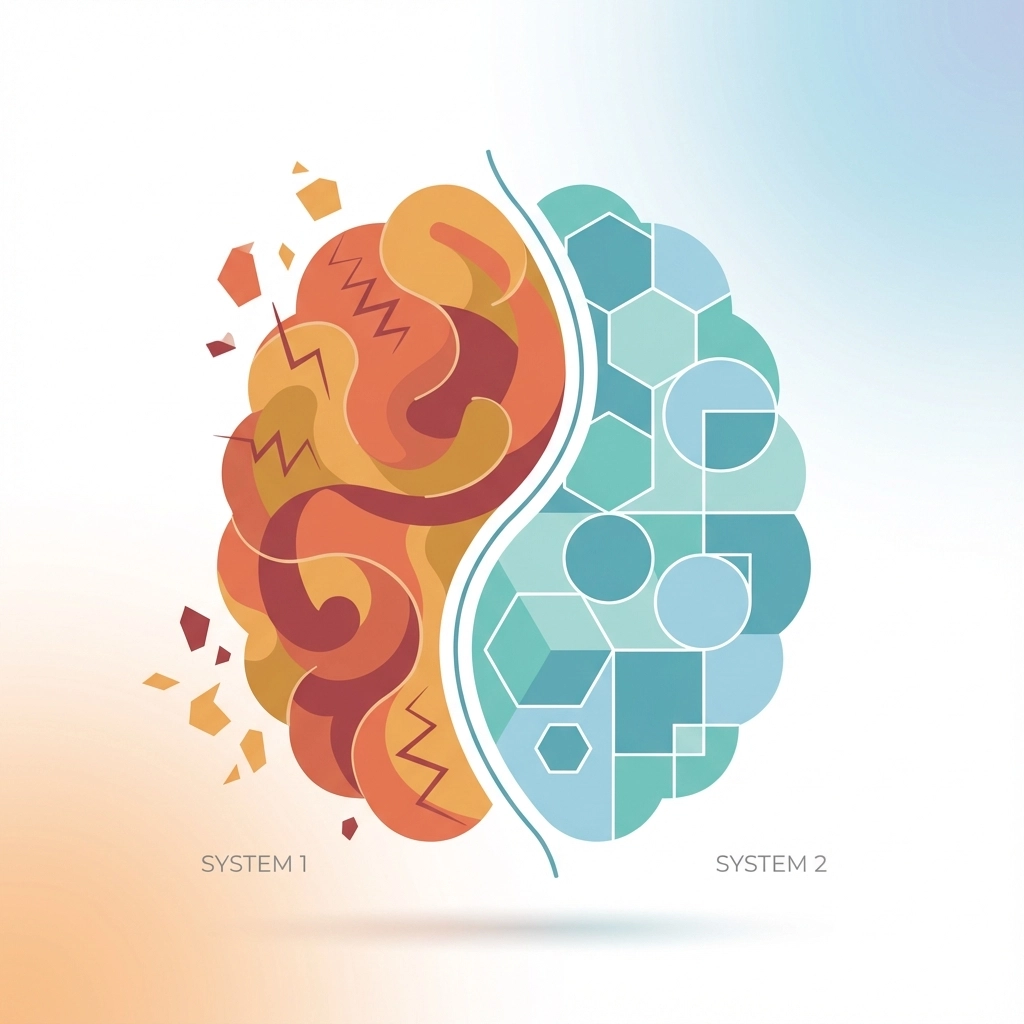
Your mind operates through two distinct systems:
- System 1: Fast, automatic, emotional processing
- System 2: Slow, deliberate, logical thinking
Most entrepreneurs live in System 1 all day. Every notification, every “urgent” email, every random thought pulls you deeper into reactive mode.
The shift: Create intentional pauses throughout your day. I call these “System 2 checkpoints.”
Set three random alarms on your phone. When they go off, ask yourself: “Am I operating from reaction or intention right now?”
This simple practice trains your brain to recognize when you’ve slipped into autopilot and consciously shift gears.
Pillar 2: Belief Architecture
Here’s something most focus frameworks miss: your surface-level thoughts are driven by deeper beliefs. Many formed when you were seven years old.
I discovered this the hard way when I kept sabotaging my own success despite having all the right strategies. Turns out, I had a buried belief that “successful people are always stressed” : so my subconscious kept creating stress to maintain my identity.
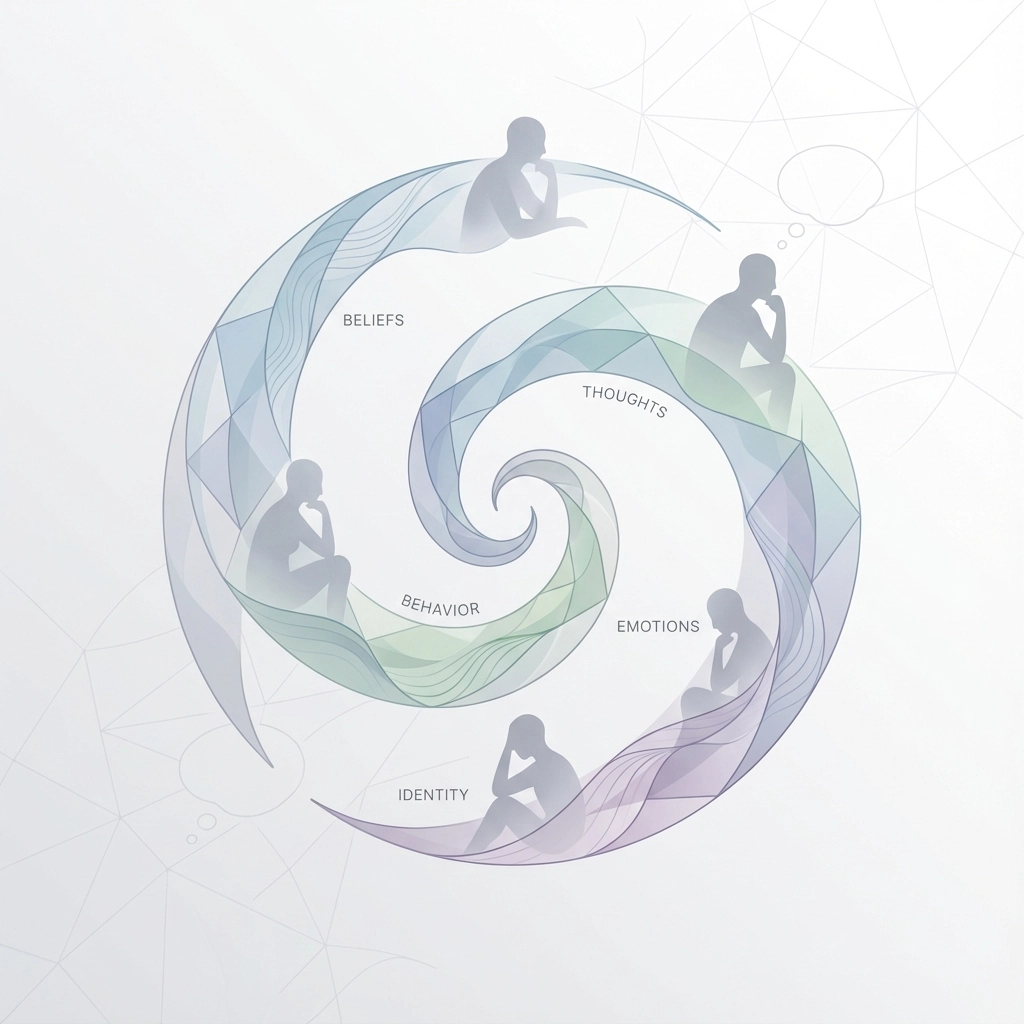
Your beliefs create a loop: Beliefs → Thoughts → Emotions → Behavior → Identity
The practice: Write down your automatic thoughts during stressful moments for one week. Look for patterns. What underlying beliefs are driving these thoughts?
Then consciously craft new beliefs that serve your goals. Not positive thinking : strategic thinking aligned with who you’re becoming.
Pillar 3: Energy Architecture
Focus isn’t just mental : it’s energetic. Your physical state directly influences your cognitive capacity.
I learned this during my second burnout. I was meditating daily, eating clean, exercising regularly. But I was still mentally foggy and emotionally reactive.
The missing piece? I wasn’t managing my energetic inputs and outputs.
Four energy levers you can control:
- Breath patterns: 4-7-8 breathing for calm, box breathing for focus
- Environment design: Remove visual clutter, add plants, optimize lighting
- Information diet: Audit your inputs : news, social media, even books
- Boundary systems: Protect your energy from emotional vampires
Pillar 4: Execution Rhythms
The final pillar is sustainable execution. Not grinding : rhythms.
Your brain craves predictable patterns. When you establish consistent rhythms for deep work, your mind stops wasting energy on decision fatigue and naturally drops into focus.
My current rhythm (which took me three years to refine):
- Morning: 90 minutes of creative work before checking any messages
- Midday: Strategic work with 25-minute focus blocks and 5-minute breaks
- Afternoon: Communication and administrative tasks
- Evening: Learning, reflection, or complete disconnection
Your rhythm will be different. The key is experimenting until you find what works for your brain and honoring it consistently.
The 20-Minute Daily Practice That Changes Everything
Here’s where this gets practical. You don’t need hours of meditation or complex morning routines.
The Mind Mastery Daily Practice (20 minutes total):
Minutes 1-5: System Recognition
Sit quietly. Notice your mental state without judgment. Scattered? Focused? Anxious? Excited? Just observe.
Minutes 6-10: Belief Architecture
Write three thoughts that showed up during your observation. For each one, ask: “What belief is driving this thought?” and “Does this belief serve my goals?”
Minutes 11-15: Energy Architecture
Practice 4-7-8 breathing: Inhale for 4 counts, hold for 7, exhale for 8. Repeat 4-6 times. Feel your nervous system shift.
Minutes 16-20: Execution Rhythms
Review your upcoming day. Identify your three most important outcomes. Schedule them during your peak energy hours.
That’s it. Twenty minutes that rewires your mental operating system.

What Changes When You Master Your Mind
I’ve been practicing this framework for two years now. My clients have been implementing variations of it for even longer.
Here’s what shifts:
Week 1-2: You’ll start catching yourself in reactive mode faster
Week 3-4: Your energy levels become more consistent throughout the day
Month 2: Decision-making feels cleaner and faster
Month 3: You’ll notice a deeper sense of calm, even during chaos
Month 6: People will ask what changed about you
The compound effect is remarkable. Small daily practices create massive shifts in your mental clarity, emotional regulation, and leadership presence.
Your Next Steps
Start with just one pillar. Don’t try to implement everything at once : that’s the old grinding mentality talking.
Pick the pillar that resonates most strongly and commit to exploring it for the next two weeks. Build the habit of mind mastery gradually, not through force.
If you want to go deeper, I’m running a 5-day Mind Mastery Challenge starting January 12th, followed by the complete 9-week Innerpreneurship program on January 26th. We’ll dive into each pillar with specific tools, live coaching, and a community of entrepreneurs who are serious about upgrading their mental game.
Because here’s the truth: your business will only grow as much as you do. And your ability to grow depends entirely on the quality of your mental operating system.
The framework is simple. The results are profound.
Your mind is your most valuable asset. Isn’t it time you learned how to use it properly?