
I was sitting in my home office last Tuesday morning, scrolling through LinkedIn, when something hit me. Post after post from successful entrepreneurs talking about “inner work,” “mindset mastery,” and “consciousness in leadership.”
Ten years ago, these same people would’ve been sharing productivity hacks and growth strategies. Now? They’re talking about meditation retreats, energy management, and : here’s the kicker : how their biggest breakthroughs came from going inward, not outward.
The shift is undeniable. 2026 isn’t just another year for business as usual. It’s the year inner mastery stops being the “woo-woo” side conversation and becomes the main event.
So what exactly is inner mastery, and why should you care?
Inner mastery isn’t about sitting cross-legged chanting mantras (though if that’s your thing, cool). It’s about developing the internal capacity to lead yourself first : your thoughts, emotions, energy, and decisions : so you can lead everything else with clarity and power.
I learned this the hard way. Three years ago, I was running a seven-figure business, checking all the external boxes of success, but internally? I was a mess. Racing thoughts, constant anxiety, decision fatigue that made choosing what to eat feel impossible. I had mastered every external system and strategy, but I’d completely ignored the operating system running it all : me.
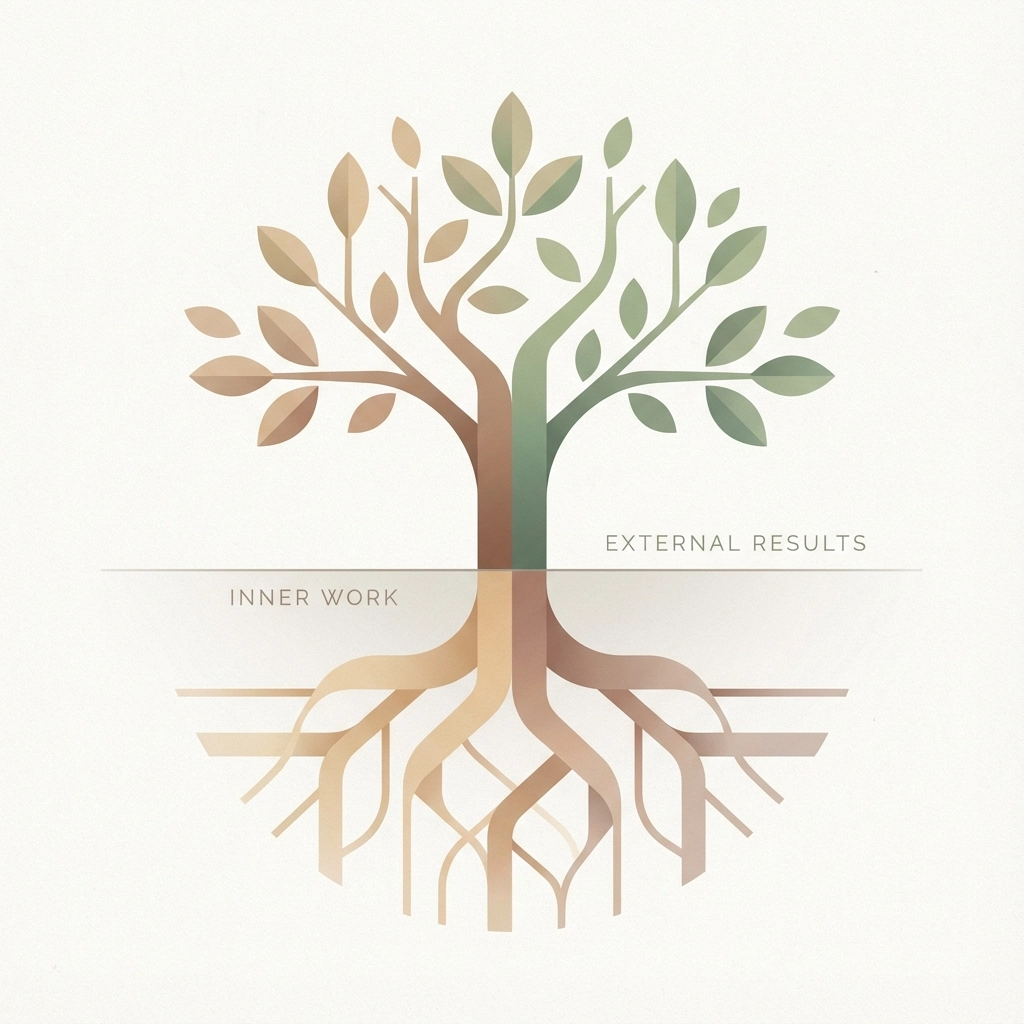
That’s when I discovered what I now call the Inner-Outer Game. The external results you want require internal mastery first. Not the other way around.

Why is everyone suddenly talking about this now?
The pandemic broke something open in the entrepreneurial world. When everything external got stripped away : the networking events, the office culture, the constant motion : we were left alone with ourselves. And many of us didn’t like what we found.
The old playbook stopped working. Hustle culture hit a wall. Burnout rates skyrocketed. Anxiety and depression among entrepreneurs reached crisis levels. The external-only approach revealed its limitations in stark, uncomfortable detail.
But here’s what’s fascinating : the entrepreneurs who thrived during this period weren’t necessarily the ones with the best strategies or biggest teams. They were the ones with inner stability. The ones who’d developed what I call “unshakeable center” : the ability to stay calm, clear, and creative regardless of external circumstances.
That’s when the conversation shifted. Success isn’t just about what you do anymore : it’s about who you become in the process.
What makes inner mastery different from traditional personal development?
Most personal development approaches give you tools to fix problems after they’ve already shown up. Inner mastery is different : it’s about developing the internal infrastructure that prevents most problems from arising in the first place.
Think of it like this: Traditional coaching teaches you how to put out fires better. Inner mastery teaches you how to be flame-retardant.
I remember working with a client who came to me completely overwhelmed. She was running a successful consulting firm but felt like she was drowning in decisions, constantly second-guessing herself, and working 70-hour weeks just to keep up. Every coach she’d worked with before had given her productivity systems and time management strategies.
Within our first session, I could see the real issue wasn’t her schedule : it was her relationship with uncertainty. She hadn’t developed the internal capacity to be comfortable with not knowing, so every decision felt life-or-death urgent. Once we worked on her uncertainty tolerance, her decision-making speed doubled and her stress levels plummeted. Same business, completely different internal experience.

How do you actually develop inner mastery?
This isn’t about adding more to your already-packed schedule. Inner mastery develops through what I call “micro-moments of awareness” : small, consistent practices that compound over time.
Here’s what I mean:
Before you check your phone first thing in the morning, take three conscious breaths and ask yourself: “How do I want to feel today?” That’s 30 seconds of inner mastery practice.
Before responding to that triggering email, pause and notice what’s happening in your body. Where do you feel tension? What emotion is present? That awareness creates choice where there was only reaction before.
During your commute, instead of listening to another podcast about growth strategies, sit in silence and simply observe your thoughts. No judgment, no trying to change anything : just awareness.
The compound effect is remarkable. These micro-moments build your internal bandwidth : your capacity to remain centered and clear when everything around you is chaotic.
What does inner mastery actually look like in practice?
Last month, one of my clients got hit with three major crises in the same week : a key team member quit, a major client threatened to leave, and his biggest competitor launched a direct attack on his market position.
Six months ago, this would’ve sent him into panic mode : sleepless nights, reactive decisions, and probably some regrettable late-night emails. Instead, he texted me: “Three fires burning. I feel calm and clear. Handling them one by one. This stuff really works.”
That’s inner mastery. Not the absence of challenges, but the presence of unshakeable inner stability while navigating them.

Why 2026 is the pivotal year
We’re at an inflection point. The entrepreneurs and leaders who develop inner mastery now : while it’s still emerging : will have a massive advantage over those who continue trying to solve inner problems with outer strategies.
The market is already rewarding this shift. Investors are looking for founders with emotional intelligence and resilience, not just technical skills. Customers are drawn to brands led by authentic, grounded leaders. Team members want to work for people who’ve done their own inner work.
But here’s the thing most people miss: inner mastery isn’t just about feeling better (though you will). It’s about performance. When you’re no longer burning mental and emotional energy on internal chaos, you have exponentially more capacity for creativity, strategic thinking, and inspired action.
The real question isn’t whether you’ll eventually need to develop inner mastery : it’s whether you’ll develop it before or after your next major breakdown.
I’ve seen too many brilliant entrepreneurs hit the wall because they ignored their internal operating system until it crashed. The repair process is always longer and more painful than the prevention process.
Where do you start?
Inner mastery begins with honest self-assessment. Not the kind where you beat yourself up for not being further along, but the kind where you get curious about your current patterns.
Ask yourself: When do I lose my center? What triggers my reactive patterns? Where do I feel most stuck internally? What would be possible if I had unshakeable inner stability?
The answers to these questions become your roadmap.
The invitation
2026 is going to separate the leaders who’ve done their inner work from those who haven’t. The external business landscape is getting more complex, not less. The leaders who thrive will be those with the internal capacity to navigate uncertainty with clarity and confidence.
This isn’t just another business strategy to add to your arsenal. It’s the foundation that makes everything else possible : and sustainable.
The conversation about inner mastery is happening everywhere because the entrepreneurs who’ve invested in it are getting results that external strategies alone could never deliver. They’re not just succeeding; they’re succeeding with a quality of experience that used to seem impossible.
The question is: Are you ready to stop managing symptoms and start addressing the source? Are you ready to develop the internal mastery that makes external success inevitable?
Because 2026 is waiting. And it’s going to reward the leaders who show up as their most masterful selves : inside and out.